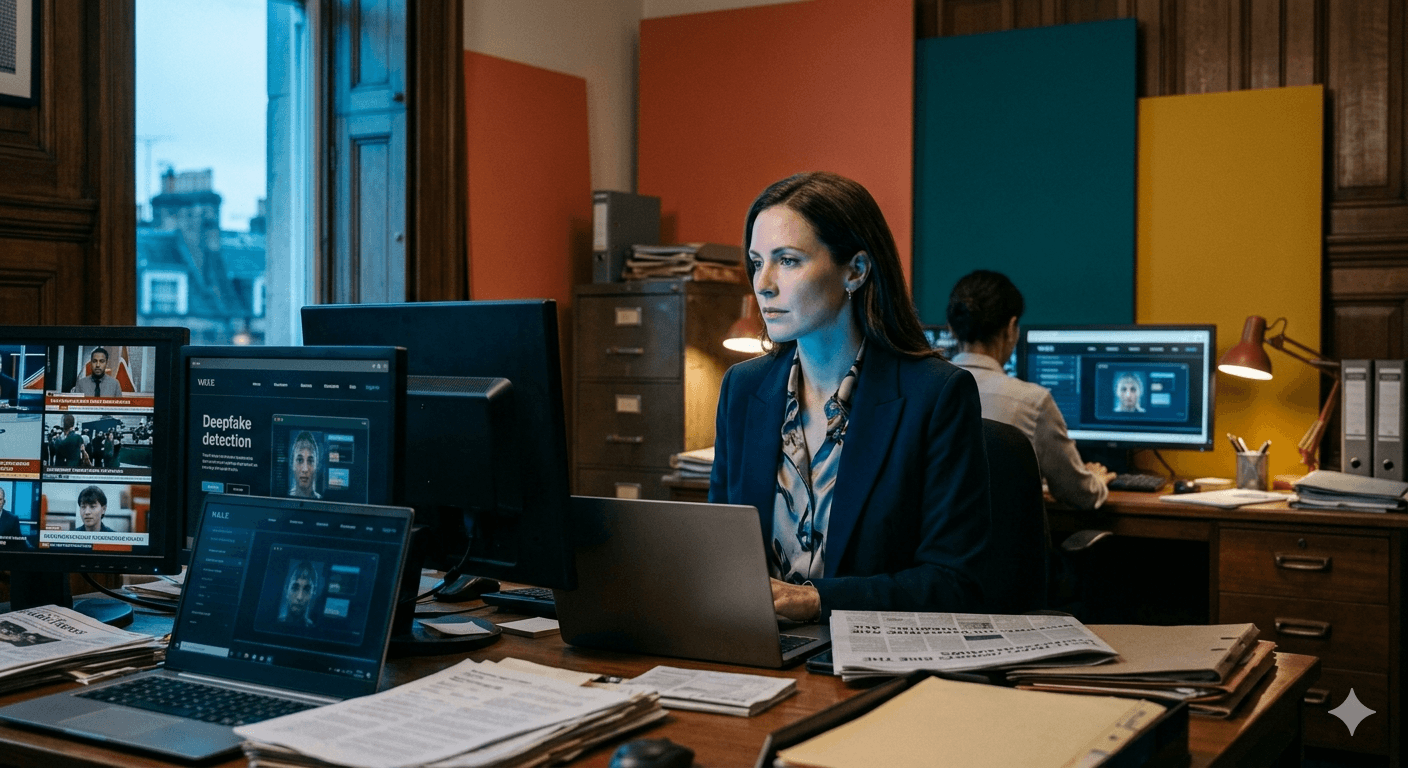
Deepfakes and the Challenge of Trusting What You See
Imagine scrolling through your social media feed and spotting a video of your favorite celebrity saying something completely outrageous or a world leader making a shocking announcement. Before you hit share, you might want to consider if you are witnessing a "deepfake."
This isn't science fiction; it's a rapidly growing reality on the internet. Deepfakes are media, primarily videos or audio recordings, that have been altered or created from scratch using sophisticated artificial intelligence. This technology allows people to make anyone appear to say or do anything, potentially with convincing realism. Understanding this capability is the first step toward becoming a savvy media consumer in the digital age.
So, how does this digital sorcery even work? The process isn't magic, but rather incredibly complex computer programming involving machine learning. Essentially, researchers or programmers "train" an AI system by feeding it thousands of pictures or hours of audio of a target person, like a actor or politician. The computer then studies every detail of their facial expressions, voice pitch, and physical movements. Once the training is complete, the AI can be used to swap that person’s face onto another body or generate a new video entirely, matching their voice with astonishing accuracy. While it can be a tool for creativity, it can also be used with malicious intent.
The rise of deepfakes introduces a major problem for our society: how can we know what’s real?
Experts who study online manipulation are increasingly concerned about how easily these tools can be used to spread disinformation. Imagine fake videos being used to trick voters before an election or scammers creating audio clips to deceive people into sending money.
Beyond fraud, the mere existence of convincing fakes can make us doubt everything we see, which creates a very dangerous world where truth itself is hard to find. This erosion of trust is one of the most significant risks posed by this technology.
How can we protect ourselves and become better at spotting deepfakes? One certainly is to have the right tools. Which is the goal for authenix. However, becoming a smart digital detective is now a necessary skill.
When you see a dramatic or unbelievable video, don't react with emotion first; instead, react with critical thinking. Where did the video originate? Is it a reputable news organization or just a random social media post?
Next, try searching for the same story from other trusted outlets to see if they are reporting it as well. Sometimes, if a video seems too incredible, that might be a warning sign.
How long is the video, or are the individual edits in the video? See, ai computing is expensive. Mot ai clips are less than 10 seconds still, often around 5seconds, then a cut. A short video with lots of cuts has a higher chance of hiding ai slop. At least, at the moment.
Learning to evaluate media authenticity isn't about being cynical. Go enjoy funny puppy videos.
But be informed that we are in a changing world and not everything shareable is worth sharing.
Learn more
Discover more from the latest posts.